Lunt Foundations Home

Category

Community Development

32 articles

The Wisdom Already Present: How Philanthropy Is Learning to Follow Community Leadership

The Wisdom Already Present: How Philanthropy Is Learning to Follow Community Leadership

A growing number of foundations are abandoning the traditional model of arriving in communities with predetermined solutions, choosing instead to ask residents what they already know works. This shift toward listening-first philanthropy is generating durable, culturally resonant outcomes—while forcing funders to confront deeply uncomfortable questions about expertise, power, and the limits of institutional knowledge.


Passing the Torch Without Losing the Flame: Generational Continuity in Family Philanthropy

Passing the Torch Without Losing the Flame: Generational Continuity in Family Philanthropy

For multi-generational family foundations, the transfer of philanthropic leadership is among the most consequential—and least openly discussed—challenges in the sector. As younger heirs bring different values, experiences, and visions for impact, families must find ways to honor founding intentions while remaining responsive to a changing world. This article explores practical strategies for navigating the inheritance question with both integrity and adaptability.

Counting What Counts: The Hidden Cost of Metric-Driven Philanthropy

Counting What Counts: The Hidden Cost of Metric-Driven Philanthropy

As foundations increasingly demand quantifiable proof of impact, a growing body of evidence suggests that the most profound community transformations are precisely those that resist easy measurement. This piece examines the accountability paradox at the heart of modern philanthropy and argues for evaluation frameworks that honor both the rigor of data and the irreducible complexity of human change.

Doing More with Less: The Surprising Science Behind Small Foundations That Punch Above Their Weight

Conventional wisdom suggests that philanthropic impact scales with budget size, yet a growing body of evidence tells a different story. Some of the most transformative community change in America is being driven by foundations operating on shoestring budgets, where scarcity breeds ingenuity. This investigation explores why resource constraints can be a foundation's most powerful strategic asset.

Beyond the Seat at the Table: How Community Leaders Are Reshaping Foundation Governance From the Inside

For decades, foundation boards have included representatives from the communities they serve — often one or two individuals whose presence satisfied a diversity requirement without meaningfully altering institutional decision-making. A growing movement across American philanthropy is challenging that arrangement, demanding not symbolic inclusion but genuine governing authority for Black and Latino leaders whose communities bear the greatest consequences of how philanthropic resources are allocat

When the Mission Outlives the Problem: Navigating Philanthropic Obsolescence with Integrity

Every foundation is built around a problem someone believed was urgent enough to dedicate resources to solving. But what happens when that problem changes shape, diminishes, or disappears entirely? This opinion piece examines the difficult — and often avoided — conversation about mission obsolescence in American philanthropy, and offers a principled framework for leaders willing to ask whether their foundation's original purpose still serves the communities it was designed to help.

The Productive Pause: What Happens When Foundations Deliberately Step Away

The Productive Pause: What Happens When Foundations Deliberately Step Away

Intentionally reducing or withdrawing funding from a nonprofit organization sounds, at first, like an act of abandonment. But a growing number of foundations are discovering that a carefully planned retreat from financial support can be among the most powerful catalysts for organizational resilience and long-term independence. The evidence is both counterintuitive and compelling.

The Year Between: How Funded Gap Programs Are Opening New Doors for First-Generation Students

The Year Between: How Funded Gap Programs Are Opening New Doors for First-Generation Students

For decades, the gap year was a privilege reserved largely for students whose families could afford to pause. A new generation of philanthropically-funded programs is changing that equation—giving low-income and first-generation teens a structured, meaningful year of growth between high school and their next chapter, with results that are quietly challenging conventional assumptions about what college preparation actually requires.

The Missing Middle: How Investing in Mid-Sized Community Organizations Is Quietly Reshaping Regional Philanthropy

The Missing Middle: How Investing in Mid-Sized Community Organizations Is Quietly Reshaping Regional Philanthropy

Between the hyperlocal grassroots group and the large institutional nonprofit lies a category of community organization that philanthropic capital has long overlooked. Mid-sized organizations — those operating with annual budgets between $500,000 and $5 million — are increasingly proving to be the connective infrastructure through which lasting regional change is built, and strategic funders are beginning to take notice.

After the Check Clears: The Quiet Crisis That Strikes Community Programs When Grant Funding Disappears

After the Check Clears: The Quiet Crisis That Strikes Community Programs When Grant Funding Disappears

Across the United States, effective community programs are quietly collapsing not because they failed, but because the funding structures designed to support them were never built to last. A closer examination of the gap between grant cycles and genuine community change timelines reveals both the scale of the problem and a set of structural reforms that forward-thinking foundations are beginning to adopt.

Measured to Thrive: Rethinking Why Nonprofits Resist the Data That Could Prove Their Worth

Measured to Thrive: Rethinking Why Nonprofits Resist the Data That Could Prove Their Worth

Many community organizations quietly fear the very evaluation tools that philanthropic funders offer to strengthen them. Understanding the psychological and structural roots of this resistance reveals a path toward measurement frameworks that build trust rather than erode it — and ultimately empower the organizations doing the most essential work.

The Power of No: How Strategic Restraint Is Becoming Philanthropy's Most Effective Tool

The Power of No: How Strategic Restraint Is Becoming Philanthropy's Most Effective Tool

In a sector often defined by expansive ambitions and broad mandates, a growing number of foundations are discovering that saying no—deliberately, consistently, and with care—may be among the most consequential decisions they can make. By narrowing their focus rather than widening their reach, these organizations are achieving outcomes that diffuse giving rarely produces.

Unglamorous and Essential: The Case for Funding the Operational Backbone of America's Nonprofits

Unglamorous and Essential: The Case for Funding the Operational Backbone of America's Nonprofits

The nonprofit sector has a spending problem—but not the one most people assume. The real crisis is not that organizations spend too much on administration; it is that they are systematically underfunded in the operational areas that determine whether programs can survive, scale, and sustain their impact over time. Foundations that continue to restrict funding to direct services may be inadvertently limiting the very outcomes they seek to create.

More Than a Garden: How a Single Philanthropic Investment in Green Space Reshapes Food Security, Mental Health, and Community Identity

More Than a Garden: How a Single Philanthropic Investment in Green Space Reshapes Food Security, Mental Health, and Community Identity

When a local foundation funds a community garden in a food-insecure neighborhood, the returns extend far beyond the harvest. From measurable drops in household grocery costs to unexpected gains in youth engagement and neighbor-to-neighbor trust, place-based investments in green infrastructure are proving to be among the most consequential bets in community philanthropy.

Two Generations, One Solution: How Intergenerational Mentorship Programs Are Healing Loneliness at Both Ends of Life

Two Generations, One Solution: How Intergenerational Mentorship Programs Are Healing Loneliness at Both Ends of Life

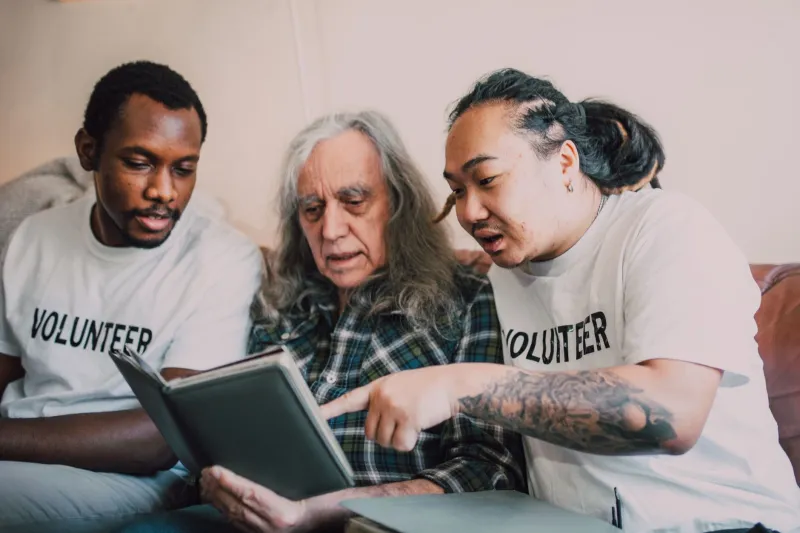
Across the United States, a growing number of foundations are funding programs that bring isolated seniors and at-risk youth together in structured mentorship relationships — with remarkable results for both. Research increasingly supports what community builders have long suspected: that loneliness does not discriminate by age, and that its antidote may lie in the very connections society has spent decades discouraging. These intergenerational models are quietly redefining what community develo

Neighbors as Healers: How Volunteer-Powered Mental Health Networks Are Reaching the Communities That Systems Left Behind

Neighbors as Healers: How Volunteer-Powered Mental Health Networks Are Reaching the Communities That Systems Left Behind

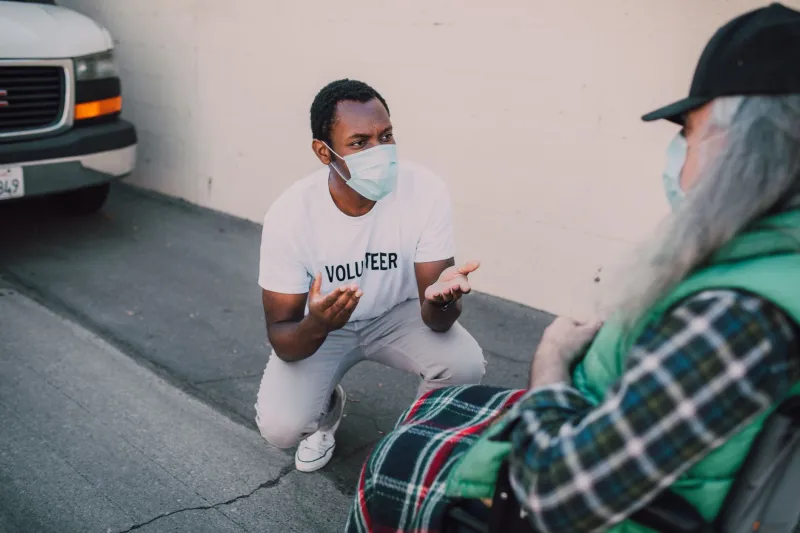
Across the United States, a quiet revolution in community mental health care is unfolding—not in clinical offices, but in church basements, community centers, and living rooms. Volunteer-driven peer support networks are stepping into the profound gaps left by underfunded public health systems, offering accessible, human-centered care to those who need it most. Philanthropic investment is now helping these grassroots efforts grow without sacrificing the trust and intimacy that make them effective

A Key in the Hand: How Transitional Housing Programs Are Turning Shelter Into Lasting Stability

A Key in the Hand: How Transitional Housing Programs Are Turning Shelter Into Lasting Stability

Across American cities, nonprofit-led transitional housing initiatives are proving that a stable address is far more than a roof overhead — it is the foundation upon which health, employment, and civic belonging are built. Programs in Houston, Denver, and Detroit have pioneered wraparound models that pair housing with mental health services, job training, and financial literacy, yielding outcomes that benefit not only individuals but entire neighborhoods. The evidence is mounting that investing

The Anchor Holds: Why Community Centers Are America's Most Overlooked Infrastructure Investment

The Anchor Holds: Why Community Centers Are America's Most Overlooked Infrastructure Investment

Across underserved towns and cities throughout the United States, strategically funded community centers are quietly functioning as the connective tissue of civic life — delivering job training, mental health support, youth programming, and emergency coordination under one roof. Philanthropic organizations are beginning to recognize these spaces not as amenities, but as essential infrastructure. The returns, measured in healthier families, stronger local economies, and more resilient neighborhoo

Neighbor by Neighbor: How Mutual Aid Networks Are Quietly Reweaving America's Frayed Social Fabric

Neighbor by Neighbor: How Mutual Aid Networks Are Quietly Reweaving America's Frayed Social Fabric

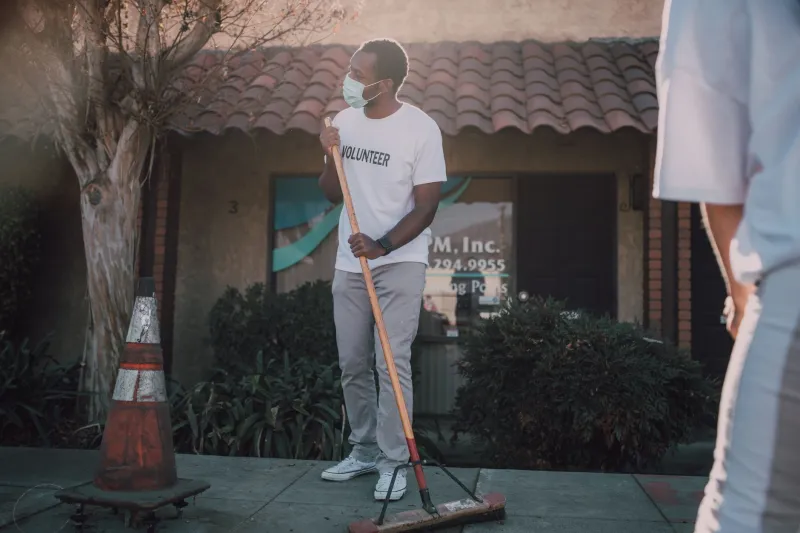
What began as emergency response during a global pandemic has quietly matured into something far more enduring: a nationwide constellation of hyperlocal mutual aid networks redefining how Americans care for one another. From rural Appalachia to urban Los Angeles, these volunteer-driven communities are filling critical gaps in the social safety net — and in doing so, revealing a profound hunger for authentic, neighbor-to-neighbor connection.

When Neighbors Become Grantmakers: The Rise of Resident-Led Giving Circles Across America

When Neighbors Become Grantmakers: The Rise of Resident-Led Giving Circles Across America

Across the United States, small groups of ordinary residents are pooling modest contributions into giving circles that direct philanthropic dollars straight into the neighborhoods they call home. These grassroots collectives are quietly dismantling traditional philanthropic hierarchies, placing decision-making power in the hands of those who know their communities best. Foundation leaders and equity advocates alike are taking notice — and what they are finding may reshape charitable giving for g

From the Ground Up: How Indigenous-Led Foundations Are Reshaping Philanthropy on Tribal Lands

From the Ground Up: How Indigenous-Led Foundations Are Reshaping Philanthropy on Tribal Lands

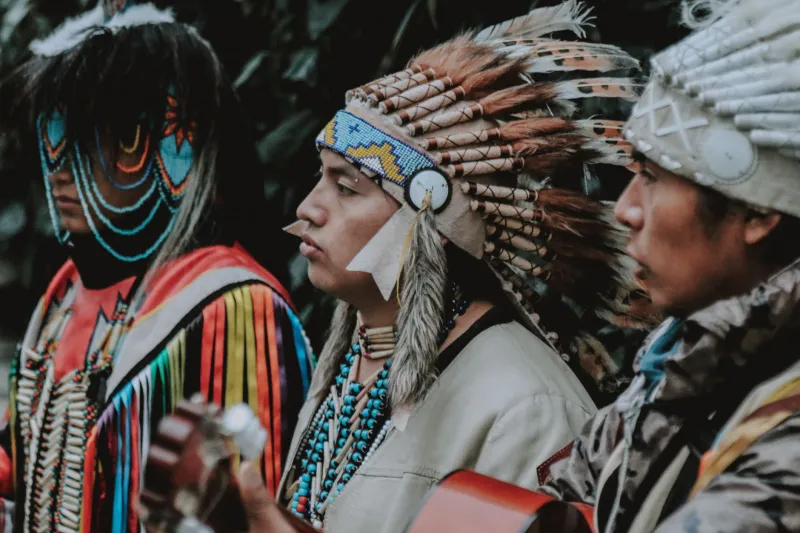
Across the United States, a growing number of Native American communities are establishing their own philanthropic institutions—redirecting charitable resources away from outside intermediaries and back into the hands of tribal members themselves. These Indigenous-led foundations are funding everything from language revitalization efforts to renewable energy projects, demonstrating that self-determination is not merely a political principle but a proven framework for lasting community developmen

From Pews to Pipelines: How Faith Communities Are Redefining the Fight Against Poverty in America

From Pews to Pipelines: How Faith Communities Are Redefining the Fight Against Poverty in America

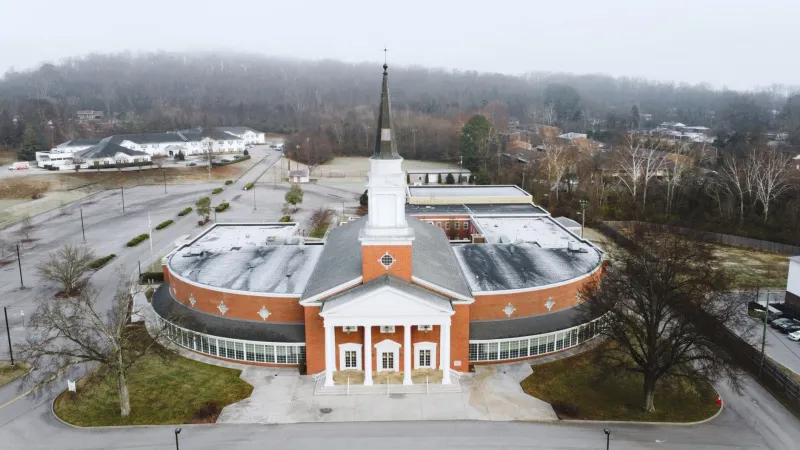
Across the United States, houses of worship are quietly transforming into sophisticated engines of community development — launching affordable housing projects, workforce training programs, and wraparound social services that rival those of established nonprofits. By leveraging deep community trust, volunteer networks, and a shared moral imperative, faith-based organizations are achieving measurable outcomes where larger institutions have often struggled. This is the story of a grassroots movem

Rooted in Place: How Community Land Trusts Are Securing the Future of Small-Town America

Rooted in Place: How Community Land Trusts Are Securing the Future of Small-Town America

Across rural and small-town America, a quiet but consequential movement is reshaping who gets to stay, who gets to own, and who gets to thrive. Community land trusts — long overlooked in favor of more visible housing interventions — are proving to be one of the most durable tools available for keeping low- and moderate-income families anchored in the places they call home. Philanthropic investment in these models is not merely funding housing; it is funding the conditions under which communities

Before the Cracks Appear: How Philanthropic Apprenticeship Programs Are Reshaping Young Lives Across America

Before the Cracks Appear: How Philanthropic Apprenticeship Programs Are Reshaping Young Lives Across America

Across the United States, a growing number of charitable foundations are investing in structured apprenticeship pipelines that connect at-risk teenagers with skilled tradespeople, mentors, and entrepreneurs. These programs are proving that the most powerful intervention is one that arrives early — equipping young people with tools, confidence, and purpose before opportunity slips away. The results are quietly transforming communities from the ground up.

One Job, One Family, One Community: The Multigenerational Power of Workforce Investment

One Job, One Family, One Community: The Multigenerational Power of Workforce Investment

When foundations invest in workforce development, the returns rarely stop at a single paycheck. Emerging research and on-the-ground stories reveal how one adult's economic stability can quietly transform the educational trajectories, health outcomes, and housing security of an entire household — and, over time, an entire neighborhood.

Planting the Seed: How a Single Strategic Grant Can Echo Through a Community for Decades

Planting the Seed: How a Single Strategic Grant Can Echo Through a Community for Decades

A modest foundation grant, precisely placed, can set in motion a chain of social and economic change that outlasts the original investment by generations. Through the story of one youth workforce initiative in a struggling Midwestern community, this piece traces how a single act of strategic philanthropy quietly rewired an entire neighborhood's future. The lesson is not about the size of the check — it is about the wisdom behind it.

Neighborhood by Neighborhood: How Community Foundations Are Closing America's Education Divide

Neighborhood by Neighborhood: How Community Foundations Are Closing America's Education Divide

Across the United States, a quiet but powerful movement is taking shape — one grant, one mentorship program, and one resource center at a time. Philanthropic organizations and local foundations are partnering with schools, families, and municipal governments to dismantle the systemic barriers that have long kept low-income students from reaching their full potential. The evidence is compelling: when communities invest in their own, the results can be transformational.

Rebuilding from Within: How Local Foundations Are Breathing New Life into Forgotten American Cities

Rebuilding from Within: How Local Foundations Are Breathing New Life into Forgotten American Cities

Across the American Midwest and Rust Belt, mid-size cities that once defined industrial prosperity have faced decades of population loss, disinvestment, and diminished opportunity. Yet in places like Youngstown, Ohio and Gary, Indiana, a quiet but powerful transformation is underway — one driven not by top-down government mandates, but by the steady, deliberate work of community foundations committed to lasting change.